

Setting up a company in Singapore is one thing. Actually being there to run it is another. Without the right legal status, you’re managing operations from a distance. And that only works for so long.
"(《世界人权宣言》) employment pass for business owners is what bridges that gap. It’s the primary work visa for foreign professionals and shareholders who want to manage their companies on the ground. Here’s how it works, what you need to qualify, and why most foreign entrepreneurs choose this route over the alternatives.
What Is an Employment Pass in Singapore?
An 就业证 is a work visa issued by Singapore’s Ministry of Manpower for foreign professionals, managers, and executives. It’s not for general workers. It sits at the higher end of the visa spectrum for skilled and experienced people.
There are no fixed quotas, but MOM considers qualifications and salary. First-time applicants typically get a two-year pass, renewable for up to three years at a time. It lets you live and work in Singapore legally, and it opens the door to Permanent Residency down the line.
Can Business Owners Apply for an Employment Pass?
Yes. If you incorporate a Private Limited Company in Singapore, you can be both a shareholder and an employee of that company. That employee status is what makes the 新加坡就业准证 application possible.
Your firm needs to be registered with ACRA. And you need to be taking an active role – Director or Managing Director, not just a passive shareholder. MOM wants to see that you’re actually running the business, not just holding equity in an overseas company. For Singapore business owners who want to be hands-on with their operations, this is the most straightforward path.
Key Requirements for Business Owners
To obtain approval for an employment pass for business owners, several things must be in order.
- Salary. The minimum is SGD $5,000 per month, but the actual bar is higher depending on your age and experience. Older applicants and those in financial services face higher thresholds. This isn’t just a checkbox. It signals to MOM that your company can actually sustain your presence.
- COMPASS 框架. Applications now go through a points-based assessment. You earn points for salary level, qualifications, how your nationality contributes to company diversity, and whether the company supports local hiring. It sounds complicated, but in practice, it’s a structured way to show you’re bringing genuine value.
- Qualifications. A university degree or recognized professional certifications. The stronger the credentials, the smoother the process.
- Company health. Your firm needs a physical office address and enough paid-up capital to cover your salary and operating costs. A shell setup with no real activity gets flagged and rejected.
- Documents. Passport, educational certificates, and the company’s latest business profile from ACRA.
Employment Pass Application Process
The application has to be submitted by the company (your firm) or a licensed employment agency. You can’t submit it for yourself as an individual.
- Step 1: Incorporate the company. You need a locally resident director to complete the initial registration. This is standard and easily handled through a corporate secretarial firm.
- Step 2: Job posting. In most cases, firms need to advertise the position on the MyCareersFuture portal for 14 days to demonstrate they considered local candidates first. Some high-earning roles have exemptions – worth checking before you assume you need to go through this.
- Step 3: Submit the application. Done through MOM’s online portal. Include all required documents and pay the application fee.
- Step 4: In-Principle Approval (IPA). If approved, you get an IPA letter. This lets you enter Singapore to complete the process.
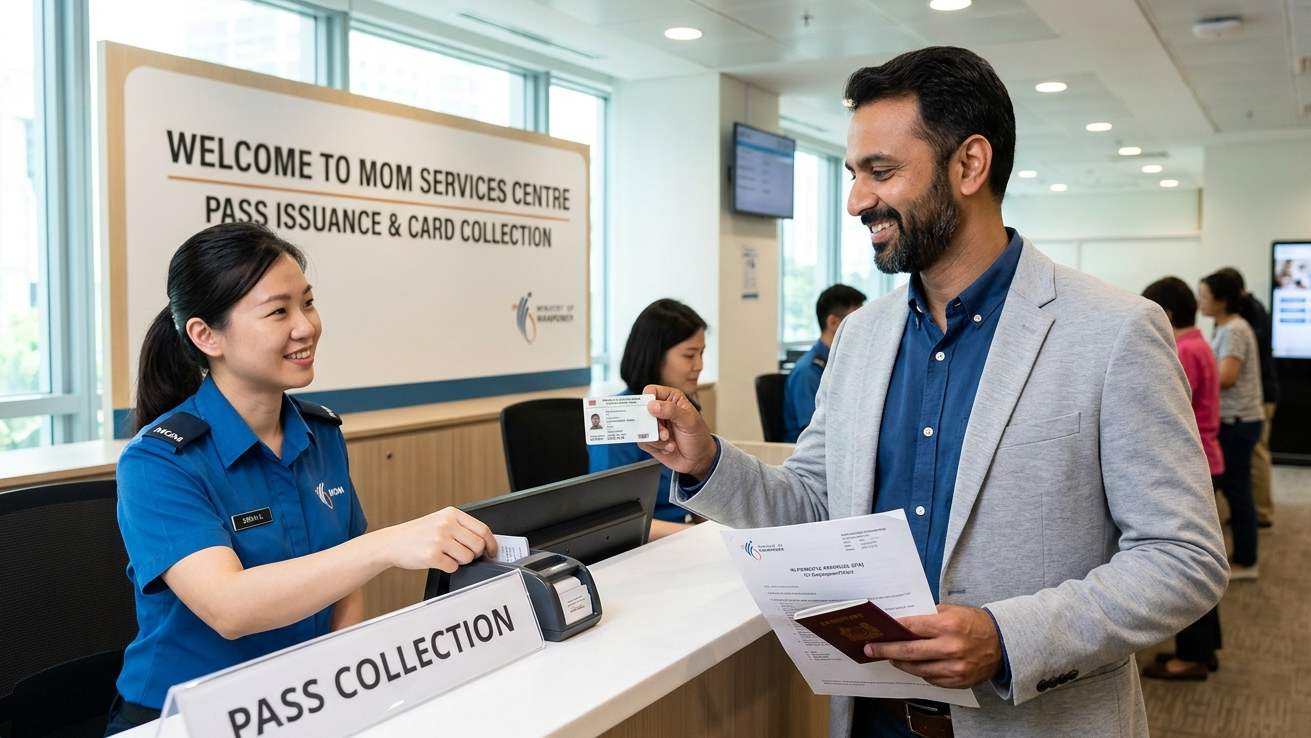
- Step 5: Card issuance. You attend for fingerprinting and a photo. The physical 就业证 card gets mailed to your office address.
The timeline from application to having the card in hand typically runs several weeks. Plan your travel and operational timeline around that.
Employment Pass vs Entrepreneur Pass (EntrePass)
Many people encounter the EntrePass when researching and wonder whether it’s more appropriate. Generally, it isn’t, at least not for most business owners.
The EntrePass was built for venture-backed startups or founders with significant intellectual property. It has specific requirements around VC funding, innovation credentials, and hiring local staff in the first year. Miss any of those milestones, and renewal gets complicated.
"(《世界人权宣言》) employment pass in Singapore is more straightforward – no innovation milestones, no specific funding requirements, no mandated local hiring percentages in year one. If you’re building a consulting firm, a trading company, a professional services operation, or a regional HQ, the Employment Pass is almost always the better fit for Singapore business owners.
Benefits of an Employment Pass for Business Owners
The practical benefits go beyond just being legally allowed to work.
Being physically present in Singapore changes how you operate. You can attend industry events, meet partners in person, and manage your team directly. Business in Singapore runs on relationships, and relationships require presence.
If your salary reaches SGD $6,000 or above, you can apply for Dependant’s Passes for your spouse and children. Relocating the family becomes much more manageable. For business in Singapore, founders who plan to stay long-term matter a lot.
And the 就业证 is a meaningful step toward Permanent Residency. It establishes your tax residency status and gives you stability in a country with competitive personal and corporate tax rates.
常见挑战及克服方法
Rejection happens, and it’s usually for predictable reasons.
The most common issue is salary. Either too low for your age and experience level, or not justified by the company’s financial situation. MOM uses salary as a proxy for whether you’re genuinely needed and whether the business is real.
The second common reason is what MOM calls a “shell company” concern. If the company has no real business activity, no clients, no revenue, and exists only to obtain a visa, it gets rejected. The business needs to be operational or at least have a credible plan to become operational quickly.
If you are rejected, you have 3 months to appeal. A strong appeal addresses the specific rejection reason directly – signed client contracts, evidence of investment, and a clearer business plan. Vague appeals don’t move the needle.
Business Opportunities in Singapore for Entrepreneurs

The reason business opportunities in Singapore attract so many foreign entrepreneurs is the country’s position in Southeast Asia. It’s the natural hub for companies that want access to Indonesian, Vietnamese, Malaysian, and Philippine markets without setting up in each separately.
Sectors where business opportunities in Singapore are particularly strong right now: fintech and green finance (massive government and institutional support), HealthTech (medical innovation is a policy priority), e-commerce logistics (many global brands use Singapore as their regional distribution centre), and professional services (consulting, legal, accounting firms servicing the constant flow of international companies expanding into Asia).
The infrastructure is world-class, the legal system is transparent and genuinely pro-business, and English is the language of commerce. For entrepreneurs thinking regionally, it’s hard to find a better base.
Is the Employment Pass Right for Your Business?
For most foreign business owners incorporating in Singapore, yes. It’s the most stable and predictable route. It gives you legal presence, a path to residency, and the ability to actually run your company rather than remote-managing it from another country.
The requirements are real: salary, qualifications, and a genuine operating company. But if you meet them, the employment pass for business owners sets you up properly from the start. Getting the setup right from day one matters more than most people realize.
一张签证 helps entrepreneurs structure their Singapore company and employment pass for business owners‘ application correctly the first time. Get in touch to discuss your situation.


 English
  Chinese
  Japanese