

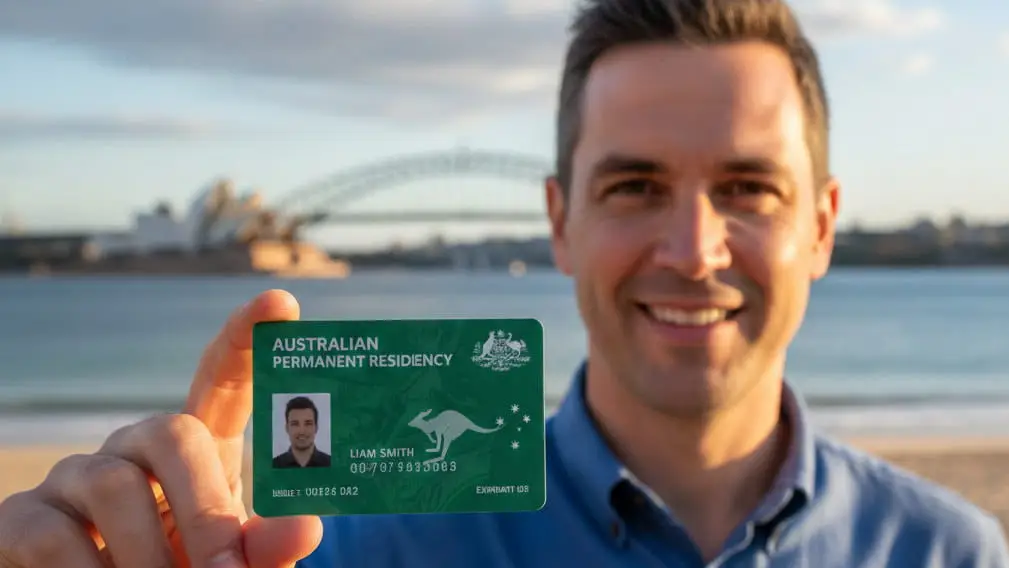
Let’s be honest – migrating to Australia is not a decision people make lightly. It takes months of research, a fair amount of paperwork, and the kind of patience that doesn’t come naturally when you’re excited about a new country. But for those who go through with it, Australian permanent residency changes everything. Not just logistically – psychologically. There’s a real difference between living somewhere on a temporary visa and actually knowing you can stay.
This guide is for people who are serious about making that shift. We’ll walk through how to get PR in Australia in plain terms – no legal jargon, no fluff – just the process, the requirements, and what to realistically expect along the way.
What Is Australian Permanent Residency (PR)?
Australian permanent residency is a visa status that lets a non-citizen live, work, and study in Australia with no time restrictions. Unlike a student visa or a tourist visa – both of which have expiry dates and conditions attached – a PR visa gives you something closer to genuine stability.
You’re still not a citizen at this stage. You keep your original passport. But you’re no longer at the mercy of visa renewals or employer sponsorship. You can change jobs, move to a different state, or buy property. For many people moving to Australia, that freedom is the whole point.
Australia PR Requirements
The government is selective – and deliberately so. The Australia PR requirements vary depending on which visa pathway you take, but for most skilled applicants, the core criteria look like this:
- Age. Most skilled migration categories require you to be under 45 at the time of invitation. This isn’t a soft guideline – it’s a hard cutoff for most subclasses.
- English Proficiency. You’ll need to sit a recognized test – IELTS and PTE Academic are the most common choices. Higher scores don’t just satisfy the requirement; they add points to your profile, which matters a lot in a competitive pool.
- Skills Assessment. Before anything else, a relevant assessing authority needs to confirm that your qualifications and work history meet Australian standards. Which body handles your assessment depends on your occupation – Engineers Australia, the Australian Computer Society, and similar organizations each cover specific fields.
- Health and Character. You and any family members on your application will need to complete medical examinations and provide police clearances from every country you’ve lived in. There’s no way around this step.
- Points Test. Skilled migration in Australia runs on a points-based system. You accumulate points through your age, English level, years of work experience, and educational qualifications. The minimum to be eligible is 65 points, but in practice, most people who receive invitations score considerably higher.
These are the Australia PR requirements in their most condensed form. Meeting them gets you into the pool. What happens next depends on your score and the demand in your occupation.
The Australia PR Process
について Australia PR process has a clear sequence, but it’s rarely fast. Here’s how it typically unfolds:
- Check eligibility first. Look up whether your occupation appears on the relevant Skilled Occupation List and run a rough points calculation. No point going further if the basics don’t stack up.
- Get your skills assessed. Contact the right assessing body for your profession and submit your credentials for formal evaluation. This step alone can take several months, so start early.
- Pick the right visa subclass. The three most common pathways for skilled migrants are the Subclass 189 (no sponsor required), Subclass 190 (state nomination), and Subclass 491 (regional sponsorship). Each has different requirements and different implications for where you can live.
- Lodge an Expression of Interest (EOI). Through the SkillSelect system, you submit your profile and enter the candidate pool. This is not yet an application – it’s a declaration of intent.
- Wait for an Invitation to Apply (ITA). The government runs selection rounds periodically. If your points are competitive enough, you’ll receive a formal invitation.
- Submit your full application. From the date of your invitation, you have 60 days to compile and submit all required documents and pay the application fee. Missing this window means starting over.
- Wait for a decision. A case officer reviews everything. If it checks out, permanent residency is granted.
Australia PR Benefits
So what do you actually get? The Australia PR benefits are substantial – and for most people, they go well beyond what they expected when they started the process.
- No more visa stress. You can stay in Australia indefinitely. No renewal dates to track, no employer holding your status over you.
- Medicare. Permanent residents get full access to Australia’s public healthcare system. For families, especially, this makes an enormous practical difference.
- The path to citizenship. After four years of living in Australia – with at least one year as a permanent resident – you can apply for citizenship. That’s the endgame for most people who move to Australia permanently.
- Family sponsorship. Once you have a PR, you can sponsor eligible family members to join you. It opens doors for the people you’d otherwise leave behind.
- Social security access. After an initial waiting period, permanent residents become eligible for certain government payments and student financial support.
Taken together, these Australia PR benefits explain why so many people treat the process as worth whatever it takes to get through.
Responsibilities of Permanent Residents
Rights come with obligations – and Australia takes both seriously. As a permanent resident, you’re required to pay taxes on your Australian income and comply with all local laws. That part’s straightforward.
Less formally, Australia has a strong cultural expectation around community participation. The concept of the “fair go” – essentially the idea that everyone deserves a genuine shot – runs deep here. Getting involved locally, whether through sport, volunteering, or simply building relationships with neighbors, makes settlement noticeably smoother. The government supports this through programs such as the Adult Migrant English Program (AMEP), which helps newcomers improve their English and find employment more quickly.
Final Thoughts on Obtaining PR in Australia
How to get PR in Australia isn’t a mystery – but it does require sustained effort and realistic expectations about the timeline. The process rewards people who stay organized, submit complete documentation the first time, and genuinely meet the criteria rather than trying to game the edges.
Australia isn’t handing out permanent residency casually. But for skilled, committed applicants, the pathway is real and well-defined. Do the groundwork properly, and the outcome speaks for itself.
FAQ
What are the basic requirements to apply for PR in Australia?
The core Australia PR requirements include being under 45, having an occupation on the skilled list, passing an English language test, completing a positive skills assessment, and meeting health and character standards.
How long does it take to get a PR in Australia?
It varies by visa subclass and the completeness of your documentation. Most applicants should expect 6 to 18 months from start to finish. Getting your documents right the first time is the single biggest factor in keeping that timeline short.
Can I apply for an Australian PR without a job offer?
Yes. The Subclass 189 visa is entirely points-based and requires neither an employer sponsor nor a job offer. It’s the most independent route available.
What are the main Australia PR benefits?
The right to remain indefinitely, Medicare access, the ability to sponsor family members, and a direct path to citizenship after the qualifying period.
How can I improve my chances of getting PR in Australia?
A higher English score makes a meaningful difference. So does additional skilled work experience, completing a qualification in Australia, or securing state nomination, which adds bonus points to your profile.



 English
  Chinese
  Japanese